
Is it cheaper to wrap or paint a car? A professional full wrap is often cheaper upfront than a high-quality paint job when the car’s existing paint is in good condition. Using the estimates published in this guide, a full wrap may cost about $1,500–$5,000, while a quality paint job may cost about $6,000–$10,000 or more. A basic respray can cost less than a professional wrap, so compare quotes for the same vehicle and the quality of finish you actually want.
Price alone does not settle the choice. A wrap changes the appearance of sound paint without repairing it; a paint job can include the preparation and repairs needed for a damaged finish. Below is a practical comparison of upfront cost, paint condition, lifespan, maintenance, and the situations in which each option makes sense.
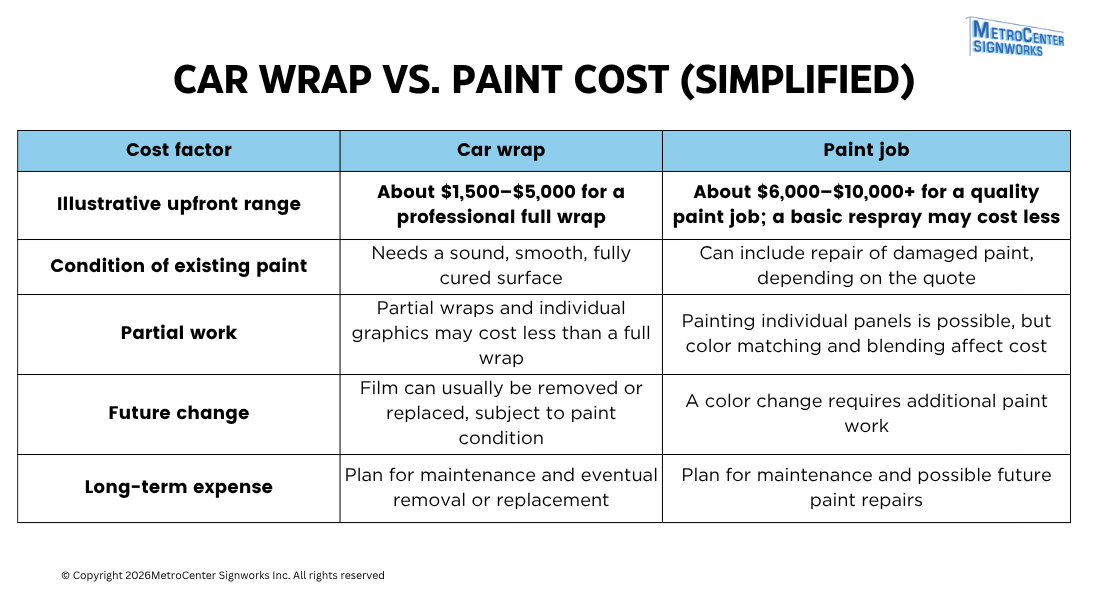
Car wrap vs. paint cost at a glance
These are illustrative ranges, not a quote. Vehicle size, current condition, labor, materials, coverage, location, and the quality of the work can move either price substantially.
| Cost factor | Car wrap | Paint job |
|---|---|---|
| Illustrative upfront range | About $1,500–$5,000 for a professional full wrap | About $6,000–$10,000+ for a quality paint job; a basic respray may cost less |
| Condition of existing paint | Needs a sound, smooth, fully cured surface | Can include repair of damaged paint, depending on the quote |
| Partial work | Partial wraps and individual graphics may cost less than a full wrap | Painting individual panels is possible, but color matching and blending affect cost |
| Future change | Film can usually be removed or replaced, subject to paint condition | A color change requires additional paint work |
| Long-term expense | Plan for maintenance and eventual removal or replacement | Plan for maintenance and possible future paint repairs |
For prices focused on local wrap projects, see our Nashville car wrap cost guide. This article focuses on deciding between wrapping and painting.
How much does it cost to wrap a car versus paint it?
A wrap quote usually depends on the vehicle’s size and shape, how much of it will be covered, the vinyl and finish selected, design work, and installation labor. A partial wrap costs less than covering the entire vehicle, although it does not provide a complete color change. See our full and partial car wrap pricing guide for a closer look at those factors.
A paint quote depends heavily on preparation. Removing old coatings, correcting dents or rust, preparing panels, matching color, and selecting a finish can change the scope and price. When comparing car wrap vs. paint cost, ask what each quote includes. A low paint price and a full wrap price may describe very different levels of work.
When is wrapping a car cheaper than painting?
Wrapping is often the less expensive upfront choice when the paint is already sound and you want a color change, custom design, or business graphics. You are paying for film, preparation, and installation rather than a new painted finish.
The calculation changes if the vehicle first needs bodywork or paint repair. Vinyl will not correct peeling clear coat, rust, or damaged panels. Add any necessary repair work to the wrap quote before comparing it with a paint quote.
When might painting cost less or offer better value?
A basic respray may cost less than a professional full wrap. That does not mean the finishes, preparation, warranties, or expected service lives are equivalent. Compare the actual scope of the quotes rather than assuming the lowest upfront number is the best value.
Painting may offer better value when the current finish needs substantial repair or you want a permanent result. If the paint is failing, paying to wrap it before repairing the surface may create another expense without solving the underlying problem.
What costs should you compare beyond the initial price?
- Preparation: Does the quote include cleaning, removing old graphics, surface correction, or bodywork?
- Coverage: Is it a full exterior color change, a partial wrap, a panel repaint, or a complete paint job?
- Materials and finish: Specialty vinyl and custom paint finishes can both raise the price.
- Maintenance: Both options need appropriate washing and care. Follow the film or paint provider’s instructions.
- Removal or future changes: A wrap will eventually need removal or replacement. Changing a painted color requires more paint work.
- Warranty and expected life: Ask what is covered and what conditions could shorten the finish’s life.
A useful comparison is to request written quotes that list preparation, materials, coverage, finish, labor, and warranty separately. That makes it easier to understand why two prices differ.
When should you choose a car wrap?
A wrap is worth considering when the existing paint is in good condition and you want a removable appearance change, printed graphics, or branding. The finish can be changed later, provided the film and underlying paint are removed and handled appropriately.
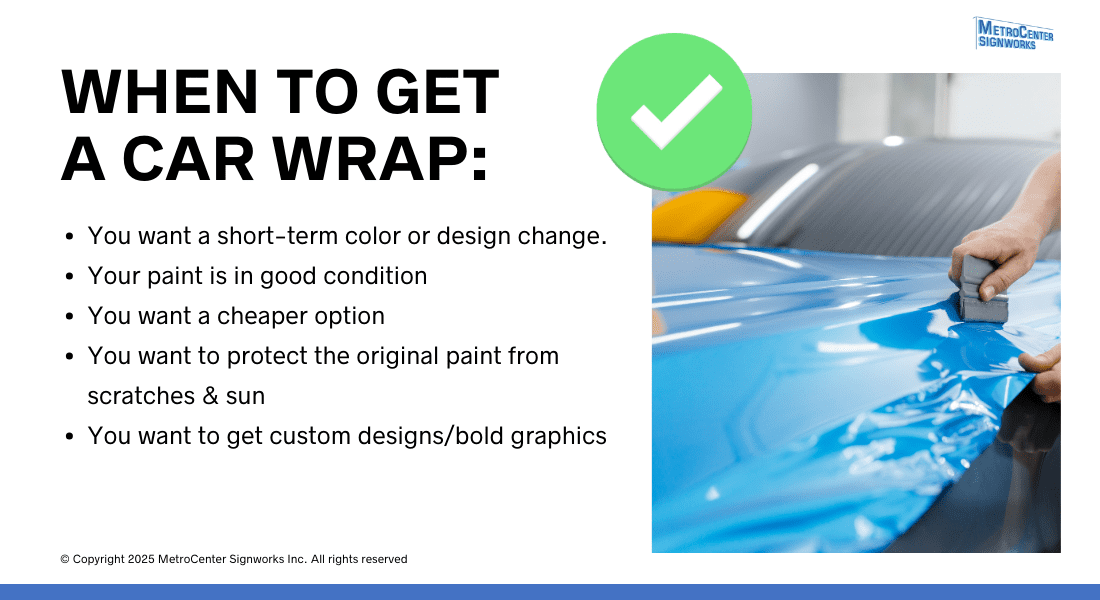
A wrap covers the paint, but it is not a substitute for paint protection film and will not prevent every scratch or chip. If you are concerned about the underlying finish, read when a car wrap can affect paint and what makes removal riskier.
When should you choose a paint job?
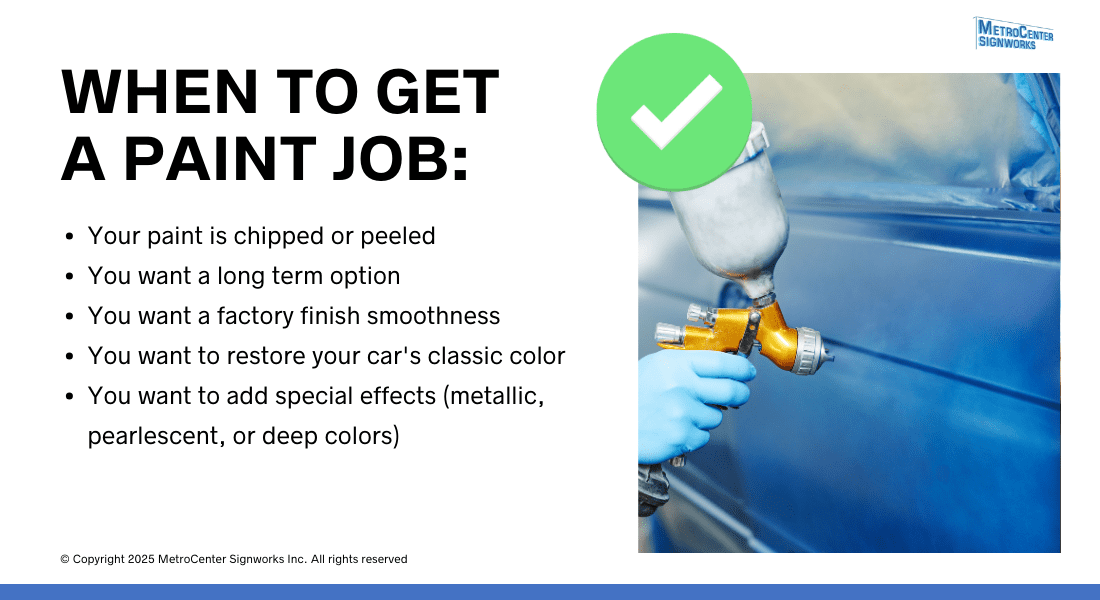
Painting is usually the more appropriate route when you need to restore chipped or peeling paint, repair rust, correct body damage, or create a lasting painted finish. The vehicle may need preparation and repair before the new paint is applied; make sure those steps appear in the quote.
Which lasts longer: a car wrap or paint?
A quality paint finish can remain serviceable for many years with proper care. A vinyl wrap has a limited service life and will eventually need removal or replacement. The actual lifespan of either finish depends on materials, sun exposure, storage, washing, and the quality of application.
Ask the wrap installer about the specific film’s warranty and care requirements. Do not assume that every wrap lasts the same number of years, especially on surfaces with heavy sun exposure.
How do wrap and paint affect resale value?
A wrap may help preserve the appearance of healthy original paint beneath it, but resale value is not guaranteed to increase. A buyer may want to see the vehicle’s paint condition, installation records, and the result after removal. A poor repaint or a wrap used to conceal damage can create concerns instead.
If the original paint is already damaged, proper repair may matter more to a future buyer than a cosmetic cover. Keep photographs and records of the vehicle’s condition before either type of work.
What about a business vehicle?
For a business car, van, or truck, the decision also involves the purpose of the finish. Vinyl can carry logos and information that can be updated when branding changes. Paint may be suitable for a lasting base color, while removable graphics can be applied over a sound painted finish. Compare the cost of the complete design and installation, not just the base finish.
Frequently asked questions
Is it cheaper to wrap or paint a car?
A full wrap is often cheaper upfront than a high-quality paint job on a car with sound paint. A basic respray may cost less than a professional wrap. Get comparable quotes before deciding.
How much does it cost to wrap a car vs. paint it?
The illustrative ranges used in this guide are $1,500–$5,000 for a professional full wrap and $6,000–$10,000+ for a quality paint job. Actual quotes vary with vehicle size, condition, coverage, materials, labor, and preparation. Basic paint work may fall below the quality-paint range. These are planning ranges. For wrap prices by coverage and vehicle type, see our complete car-wrap cost guide.
Is it cheaper to respray or wrap a car?
A basic respray can be cheaper than a professional full wrap. Compare preparation, coverage, finish quality, warranty, and expected life before treating the two prices as equivalent.
Is it better to paint a car or wrap it?
Wrap a vehicle with sound paint when you want a removable design or color change. Consider painting when the finish needs repair or you want a permanent painted result.
Can you wrap a car with peeling paint?
Wrapping over peeling paint is generally a poor choice. The film needs a stable surface, and removal can lift more of the weak finish. Repair the paint before wrapping.
The practical verdict
If the paint is healthy and your priority is a flexible appearance change, a wrap may cost less upfront than a quality paint job. If the finish needs repair, compare the cost of fixing it first; paint may be the more sensible investment. The best answer comes from written quotes for the same vehicle and a clearly defined scope of work.
If a wrap suits your vehicle, you can review our vehicle wrap options after making that comparison.
The practical verdict
A vehicle wrap can cost less upfront than a quality paint job, especially if your vehicle’s paint is still in good condition. But if the paint is already damaged, repairing and repainting it may be the better choice.
The best way to decide is to compare quotes for both options based on your vehicle and the work needed.
Want to find out how much a wrap would cost for your vehicle? Contact MetroCenter Signworks for a quote. You can also explore our vehicle wrap options to see what’s available.