
Interior office signs help businesses identify rooms, guide visitors, communicate important information, support accessibility, and create a more professional branded environment.
The right indoor office signage usually includes a mix of branding and functional signs rather than one sign type used everywhere. A reception area may need a branded lobby sign, while hallways need wayfinding signs, permanent rooms may require compliant identification signs, and entrances or shared areas may need safety or informational signage.
This guide covers six common types of interior office signs: lobby signs, wayfinding signs, directional signs, ADA signs, reception signs, and safety signs. We will also look at office room signage, materials, placement, design, and how Nashville businesses can plan a coordinated interior signage system.
If you are already planning a project, explore MetroCenter Signworks’ custom office signs for Nashville businesses.
Planning Interior Office Signage?
Send us your office layout, branding, room list, sign quantities, photos, and installation needs so we can help plan the right sign system.
What Are Interior Office Signs?
Interior office signs are signs installed inside offices, corporate buildings, medical facilities, professional practices, commercial workplaces, and similar business environments.
They can serve several purposes:
- Identify the business or brand
- Identify offices, rooms, departments, and amenities
- Direct visitors through the building
- Support accessibility
- Communicate safety information
- Provide visitor and check-in instructions
- Create a consistent visual identity throughout the workplace
An effective interior office signage system combines these functions while keeping materials, typography, colors, icons, and placement consistent.
6 Types of Interior Office Signs
| Office Sign Type | Primary Purpose | Common Placement |
|---|---|---|
| Lobby Signs | Brand identification and first impression | Lobby or feature wall |
| Wayfinding Signs | Help people navigate the building | Hallways, elevators and decision points |
| Directional Signs | Point toward specific destinations | Intersections, corridors and entrances |
| ADA Signs | Accessible room and space identification | Permanent rooms and required locations |
| Reception Signs | Visitor information and check-in communication | Front desk and waiting areas |
| Safety Signs | Warnings, emergency and safety information | Exits, equipment areas and applicable hazards |

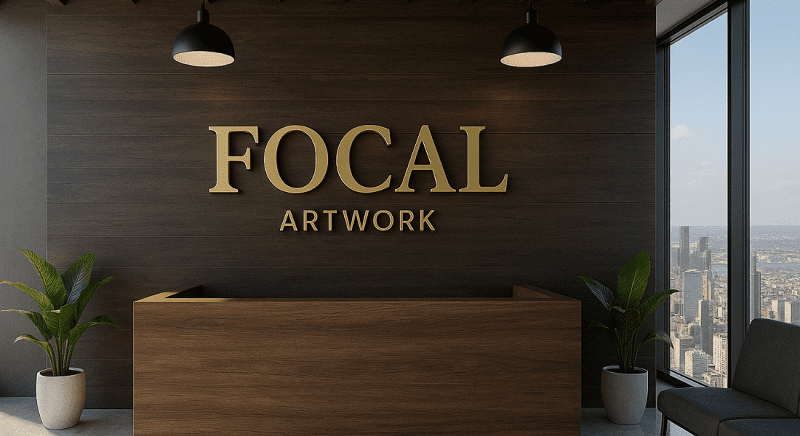
1. Lobby Signs
Lobby signs are primarily branding signs. They help visitors immediately identify the business when entering the office.
Common lobby sign styles include:
- Dimensional letters
- Acrylic logo signs
- Metal letters and logos
- Backlit or halo-lit signs
- Panel-mounted logo signs
- Custom wall-mounted branding
A lobby sign usually works best on the wall behind the reception desk, on a feature wall, or in another location visible from the primary entrance.
How to Make a Lobby Sign Look Professional
- Use the correct version of your logo.
- Match the sign colors to your brand.
- Select materials that fit the office interior.
- Size the sign appropriately for the wall.
- Allow enough negative space around the logo.
- Consider dimensional or illuminated elements when appropriate.
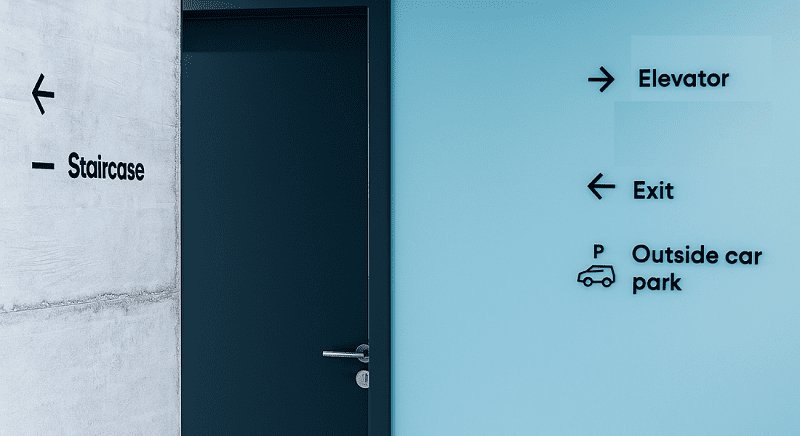
2. Wayfinding Signs
Wayfinding signs form a coordinated system that helps employees, customers, patients, vendors, and other visitors understand where they are and how to reach their destination.
Interior wayfinding signage can identify:
- Departments
- Conference rooms
- Restrooms
- Elevators
- Stairwells
- Reception areas
- Exits
- Suites
- Shared facilities
The most important locations are decision points—places where a visitor must decide whether to turn, continue straight, use an elevator, or enter another part of the building.
Tips for Better Office Wayfinding
- Use consistent terminology throughout the building.
- Keep icons and arrows visually consistent.
- Use readable typography.
- Keep destinations grouped logically.
- Place signs before a decision must be made, not after it.
- Avoid putting too much information on a single sign.
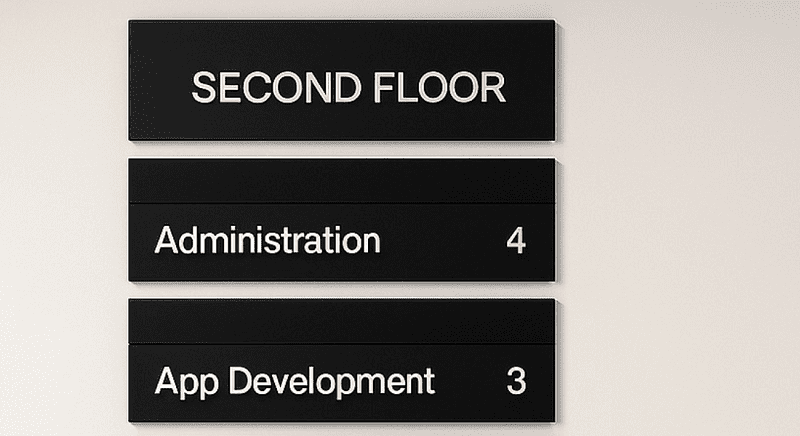
3. Directional Signs
Directional signs are one part of a larger wayfinding system. Their main job is to point people toward a destination using arrows, names, room numbers, floor numbers, or other concise information.
Examples include:
- Reception →
- Conference Rooms 201–210 →
- Restrooms ←
- Elevators ↑
- Accounting →
- Second Floor ↑
Directional signage should be easy to scan quickly. Long paragraphs, decorative fonts, inconsistent arrows, or low-contrast colors can make navigation harder.
Good Locations for Directional Office Signs
- Building entrances
- Lobby exits
- Hallway intersections
- Elevator lobbies
- Stair landings
- Department entrances
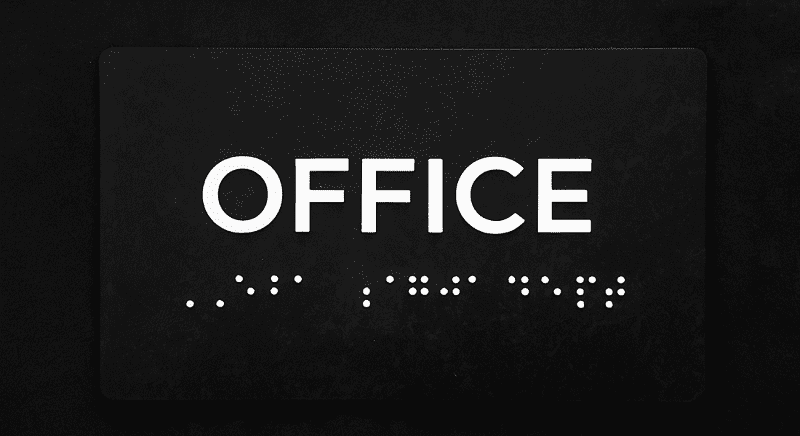
4. ADA Office Signs
ADA signs provide accessible identification for applicable permanent rooms and spaces.
Depending on the location and sign requirement, compliant signs can incorporate elements such as:
- Tactile characters
- Braille
- Accessible symbols
- Required contrast and character characteristics
- Specific mounting locations
ADA signage should not be treated as ordinary decorative signage. Requirements depend on the room, sign function, building condition, and applicable accessibility standards.
For a more detailed overview, see our ADA Braille and tactile signage guide.
Can ADA Office Signs Still Match Your Brand?
Yes. Compliant signage can often coordinate with the broader office sign system through compatible colors, materials, shapes, and design details while still meeting the applicable accessibility requirements.
5. Reception Signs
Reception signs help organize the visitor experience at the front desk or waiting area.
Unlike a lobby logo sign, which primarily identifies and brands the company, reception signage can communicate practical information such as:
- Check-in instructions
- Business hours
- Please wait here
- Visitor procedures
- Department information
- Welcome messages
- Temporary notices
A business can use both a branded lobby sign and functional reception signage in the same area without making the space feel cluttered.
Lobby Sign vs. Reception Sign
Lobby sign: primarily identifies the business and reinforces the brand.
Reception sign: primarily communicates information to visitors at or near the front desk.
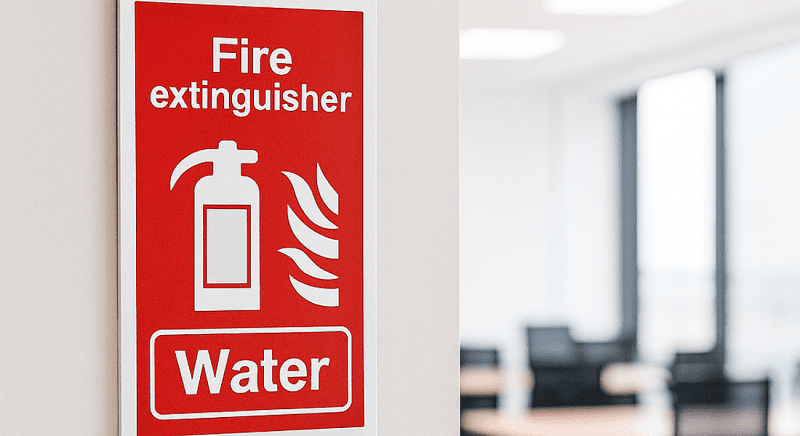
6. Safety and Regulatory Signs
Interior safety signs communicate warnings, emergency information, equipment locations, restricted access, or other safety-related messages.
Examples can include:
- Emergency exit information
- Fire extinguisher identification
- Authorized personnel only
- Electrical warnings
- Equipment-room notices
- No-smoking signs
- Emergency procedure signs
The exact signs required depend on the workplace, hazards, equipment, building use, and applicable regulations.
Safety signage should prioritize visibility and clarity over decorative styling.
What About Office Room Signage?
Office room signage is another major part of an interior signage system and can overlap with ADA, wayfinding, and identification signs.
Room signs can identify:
- Private offices
- Conference rooms
- Training rooms
- Break rooms
- Restrooms
- Storage rooms
- Mechanical rooms
- Departments
- Shared workspaces
Some office room signs may need accessibility features depending on the room and sign function, while others can be simple branded identification signs.
Interior Office Signage Materials
The best material depends on the sign’s purpose, office design, budget, expected lifespan, mounting location, and branding.
| Material | Common Office Uses | Appearance |
|---|---|---|
| Acrylic | Lobby signs, room signs and directories | Clean and contemporary |
| Aluminum | Directional, room and identification signs | Professional and durable |
| Brushed Metal | Lobby and executive-office signage | Premium and architectural |
| PVC | Room, informational and wall signs | Versatile and lightweight |
| Glass or Glass-Look Acrylic | Directories and executive spaces | Minimal and polished |
Interior Office Signage Design Tips
Individual signs should look like parts of one system rather than unrelated pieces installed at different times.
When planning interior office signage, keep these elements consistent:
- Typography: Use a limited set of readable fonts.
- Colors: Coordinate branding with required contrast and accessibility considerations.
- Icons: Use one consistent icon style.
- Arrows: Keep arrow shapes consistent across directional signs.
- Materials: Use complementary materials where possible.
- Sign sizes: Establish standard sizes for similar sign types.
- Placement: Develop consistent mounting locations and heights where appropriate.
- Terminology: Use the same room and department names throughout the building.
MetroCenter Signworks also provides sign consultation and design for businesses planning coordinated signage projects.
Office Signage Ideas for Different Spaces
Reception Area
- Dimensional logo sign
- Backlit logo
- Check-in instructions
- Visitor information
Hallways
- Directional signs
- Room identification
- Department markers
- Wall directories
Conference Rooms
- Room names
- Room numbers
- Occupancy or scheduling information
- Applicable accessible room identification
Executive Offices
- Nameplates
- Department signs
- Dimensional lettering
- Premium acrylic or metal signs
How to Plan an Interior Office Signage System
Before ordering individual signs, walk through the office as if you are visiting for the first time.
Make a list of:
- Primary entrances
- Reception areas
- Hallway intersections
- Elevators and stairs
- Departments
- Permanent rooms
- Restrooms
- Conference rooms
- Emergency and safety locations
- Areas where visitors regularly become confused
Then create a sign schedule showing the sign type, message, quantity, size, material, and installation location for each item.
This approach makes it easier to create a consistent office signage system instead of buying signs one at a time.
How Much Do Interior Office Signs Cost?
Interior office sign pricing varies significantly based on the type of sign, dimensions, material, quantity, design, lighting, accessibility requirements, mounting hardware, and installation.
A small room-identification sign and a large illuminated reception logo have very different production requirements, so there is no single useful price for all office signage.
For a broader pricing overview, see our guide to business sign costs in Nashville.
Interior Office Signs in Nashville, TN
MetroCenter Signworks works with Nashville and Middle Tennessee businesses on custom indoor signage projects ranging from individual lobby signs to coordinated office signage systems.
Projects can include:
- Lobby and logo signs
- Reception signage
- Office room signs
- ADA signage
- Interior directional signs
- Wayfinding systems
- Department signage
- Safety and informational signs
Our team can help with design, material selection, production, and installation based on the requirements of the individual office.
Need Office Signs in Nashville?
Send us your office layout, sign list, room names, branding files, photos, and project goals so we can help plan the right interior signage.
Frequently Asked Questions About Interior Office Signs
What are the 6 types of interior office signs?
Six common types of interior office signs are lobby signs, wayfinding signs, directional signs, ADA signs, reception signs, and safety signs. Businesses may also need room-identification, department, directory, and other informational signage depending on the space.
What is the difference between a lobby sign and a reception sign?
A lobby sign primarily identifies and brands the business, while reception signage usually communicates practical visitor information such as check-in instructions, hours, directions, or welcome messages.
What signs are used for office rooms?
Office room signage can include room numbers, employee or department identification, conference-room signs, restroom signs, permanent-room identification, and other door or wall signs. Some room signs may need accessibility features depending on their function.
What materials are best for professional office signs?
Common materials include acrylic, aluminum, brushed metal, PVC, dimensional lettering, and glass-look panels. The best option depends on the sign type, office design, budget, mounting location, and desired appearance.
Why are wayfinding signs important in an office?
Wayfinding signs help employees and visitors locate rooms, departments, elevators, restrooms, exits, and other destinations without unnecessary confusion.
Can interior office signs match a company’s branding?
Yes. Office signage can coordinate with company colors, typography, logos, materials, and interior design while maintaining readability and any applicable accessibility or safety requirements.
Key Takeaways
- Interior office signs combine branding, navigation, room identification, accessibility, visitor information, and safety communication.
- Six common types are lobby, wayfinding, directional, ADA, reception, and safety signs.
- Lobby signs and reception signs serve different purposes even when installed in the same area.
- Office room signage commonly overlaps with identification, ADA, and wayfinding systems.
- Acrylic, aluminum, metal, PVC, and glass-look materials are common choices for indoor office signs.
- Consistent typography, colors, icons, arrows, materials, and placement create a more professional signage system.
- Planning all required signs together usually produces a more consistent result than ordering signs individually.