
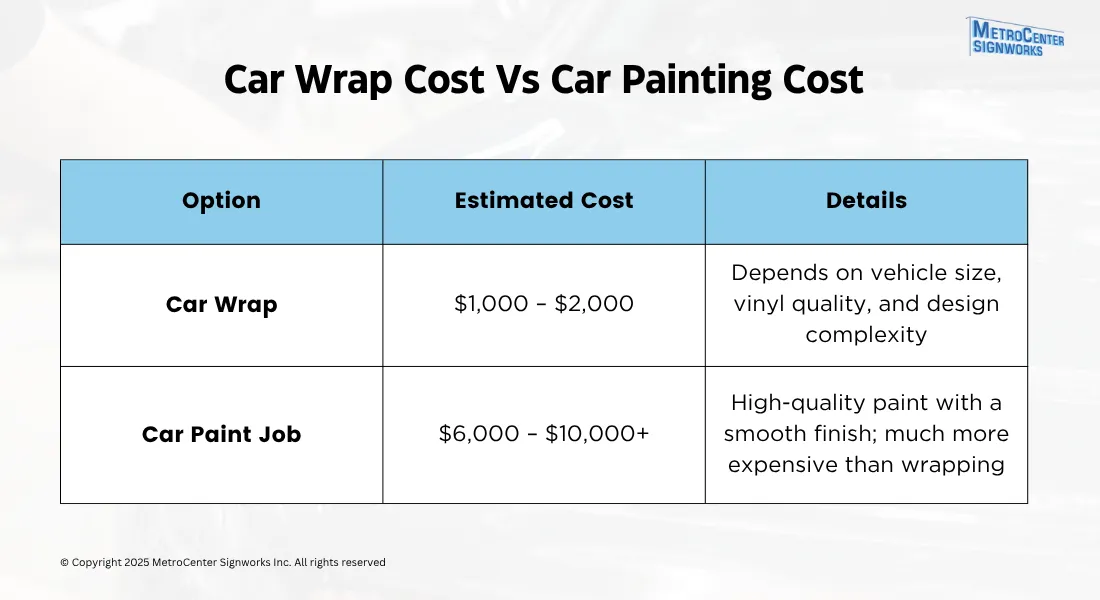
Is it cheaper to wrap or paint a car? In most cases, wrapping a car is cheaper than a high-quality paint job. A professional car wrap usually costs $1,500–$5,000, while a quality paint job can cost $6,000–$10,000+, especially if you want custom colors, bodywork, or specialty finishes.
But the cheapest option is not always the right option. A vinyl wrap works best when your vehicle’s original paint is already in good condition. If the paint is chipped, peeling, rusted, or damaged, a paint job may be the better choice before wrapping.
This guide compares car wrap vs paint cost, lifespan, maintenance, resale value, paint protection, and when you should choose each option. If you want local pricing, see our car wrap cost guide for Nashville, TN. For a full wrap pricing breakdown, see our complete car wrap pricing guide.
Car Wrap vs Paint Cost Comparison in 2026
For most drivers, a wrap is the more affordable option upfront. Paint can last longer, but a quality paint job usually costs much more and is permanent.
| Feature | Car Wrap | Paint Job |
|---|---|---|
| Typical Cost | $1,500–$5,000 | $6,000–$10,000+ |
| Partial Option | Yes, partial wraps can cost less | Usually less practical for color changes |
| Turnaround Time | Usually 2–5 days | Often 1–3 weeks |
| Lifespan | Usually 5–7 years with proper care | Often 10+ years with proper care |
| Reversible | Yes, when removed correctly | No, it is permanent |
| Best For | Color changes, business graphics, temporary customization, paint protection | Damaged paint, restoration, permanent finish changes |
| Paint Condition Needed | Paint should be smooth and healthy | Can fix damaged paint |
Considering a Vehicle Wrap After Comparing the Costs?
If a vehicle wrap looks like the better option after comparing cost, lifespan, appearance, and flexibility, learn more about the different wrap options available for personal and business vehicles.
How Much Does It Cost to Wrap a Car vs. Paint It?
A professional car wrap usually costs $1,500 to $5,000, depending on vehicle size, vinyl brand, wrap coverage, finish type, design complexity, and installation quality. Partial wraps, roof wraps, hood wraps, and simple graphics usually cost less than a full vehicle wrap.
A quality paint job usually costs $6,000–$10,000+. Custom colors, metallic paint, pearlescent finishes, bodywork, sanding, and prep work can increase that price even more.
So yes, wrapping is usually cheaper than painting. But you also need to consider the condition of the vehicle. A wrap will not fix dents, rust, peeling clear coat, or damaged paint.
Is Wrapping a Car Cheaper Than Painting?
Yes, wrapping a car is usually cheaper than painting if the car’s existing paint is in good condition. A wrap lets you change the color, add graphics, or create a custom finish without permanently changing the original paint.
However, a basic low-quality paint job may sometimes cost less than a professional full wrap. The difference is quality. Cheap paint jobs may not last as long or look as clean as a professional wrap or high-quality paint job.
If your goal is a clean color change, business branding, or a reversible design, a wrap is usually the better value. If your goal is to repair damaged paint, fix rust, or restore an old vehicle, painting may be the better investment.
Car Wrap or Car Paint: Pros and Cons
Car Wrap Pros
- Usually cheaper than a high-quality paint job.
- Can be removed later if installed and removed correctly.
- Offers many design options, including matte, gloss, satin, chrome, carbon fiber, and printed graphics.
- Can help protect healthy original paint from UV exposure, light scratches, and road wear.
- Usually faster to install than a full paint job.
- Good for business branding and vehicle advertising.
Car Wrap Cons
- Does not fix chipped, peeling, rusted, or damaged paint.
- Usually does not last as long as a quality paint job.
- Can fade, peel, or lift if low-quality vinyl is used or installation is poor.
- Improper removal can damage weak or failing paint.
- Requires careful washing and maintenance.
Car Paint Pros
- Can last 10+ years when done properly.
- Can repair or restore damaged paint.
- Best for classic cars, restoration projects, and long-term ownership.
- Provides a permanent factory-style finish.
Car Paint Cons
- Usually much more expensive than a wrap.
- Can take longer due to prep, painting, drying, and curing time.
- Permanent color change.
- Custom colors and specialty finishes can be very expensive.
When You Can’t Wrap a Car
Not every car is a good candidate for a wrap. A vinyl wrap needs a smooth, clean, stable surface so the vinyl can bond properly.
You should not wrap a car if the paint is:
- Chipped
- Peeling
- Rusted
- Flaking
- Covered in deep scratches
- Damaged by failing clear coat
- Recently painted and not fully cured
If the paint is already damaged, the wrap may not stick properly and the damage may show through. In some cases, removing the wrap later could pull off weak paint. For more details, read our guide: does a car wrap damage paint?
When to Wrap a Car vs. When to Paint a Car
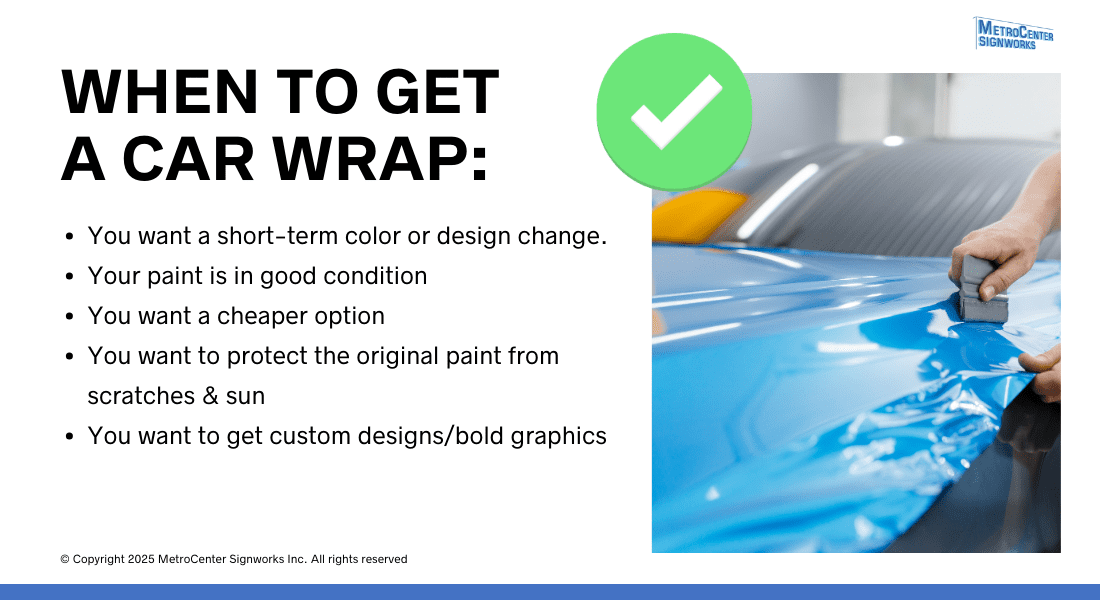
Choose a Car Wrap If:
- You want a cheaper color change than paint.
- Your paint is already in good condition.
- You want a temporary or reversible option.
- You want to protect the original paint.
- You want custom graphics, business branding, or advertising.
- You want matte, satin, gloss, chrome, carbon fiber, or printed vinyl options.
- You lease the vehicle and want a removable change.
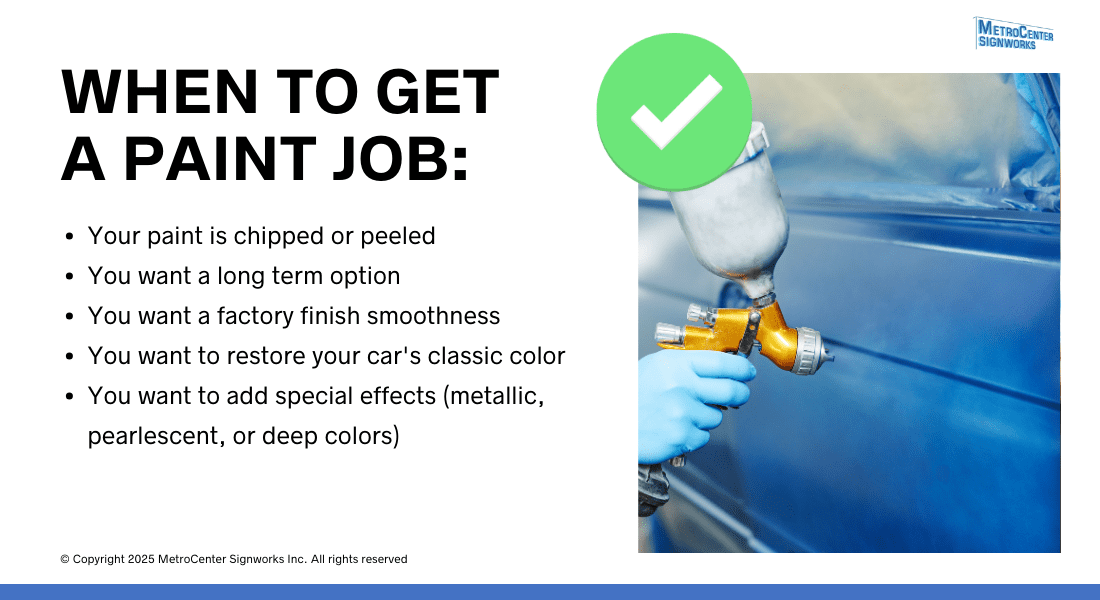
Choose a Paint Job If:
- Your paint is chipped, peeling, rusted, or damaged.
- You want a permanent color change.
- You want to restore a classic or vintage car.
- You want a long-term factory-style finish.
- You need bodywork or paint correction before changing the finish.
- You want the vehicle painted for long-term ownership.
In Short:
- Wrap it for affordability, flexibility, customization, and paint protection.
- Paint it for restoration, permanent color change, and damaged paint repair.
Is Wrapping or Painting Better for Resale Value?
Wrapping can be better for resale value if your car’s original paint is in good condition. Many buyers prefer original factory paint, and a wrap can help protect that paint from sun exposure, light scratches, and road wear.
Painting can be better for resale value if the original paint is already damaged. If the car has peeling clear coat, rust, or visible paint failure, a quality paint job may improve the vehicle’s appearance and value.
The key difference is this: a wrap helps preserve healthy paint, while paint is better for fixing damaged paint.
Maintenance of Car Wrap vs. Car Paint
Both wraps and paint need regular care, but they require different maintenance.
Car Wrap Maintenance
- Hand wash when possible.
- Avoid abrasive brushes and harsh chemicals.
- Avoid pressure washing close to wrap edges.
- Clean bird droppings, sap, and road grime quickly.
- Do not wax matte vinyl wraps.
With proper care, a professional wrap usually lasts 5 to 7 years. For more tips, see our guide on how to maintain custom vehicle wraps and graphics.
Car Paint Maintenance
- Wash regularly.
- Wax or seal the paint a few times per year.
- Fix chips and scratches before they spread.
- Protect the paint from long-term UV exposure when possible.
A high-quality paint job can last 10+ years with proper care.
Wrap vs. Paint for Business Vehicles
For business vehicles, a wrap offers an advantage that paint cannot: the vehicle can also function as branded advertising. A wrap can display a company logo, phone number, website, services, colors, and other business information while the vehicle is being driven or parked.
Paint can change a vehicle’s appearance, but it does not provide the same flexibility for business graphics. Wrap graphics can also be updated when branding, contact information, or services change.
If you are considering graphics for a company car, truck, van, or fleet, see our commercial vehicle wrap services.
So, What’s the Verdict: Wrap or Paint a Car?
Choose a wrap if you want a cheaper, reversible, customizable option and your paint is already in good condition. A wrap is ideal for temporary color changes, business graphics, paint protection, and custom finishes.
Choose paint if your original paint is damaged, you want a permanent finish, or you are restoring a vehicle for long-term use.
In simple terms: wrap for flexibility and cost savings; paint for permanence and repair.
Ready to Explore Professional Vehicle Wraps?
If you have compared wrapping and painting and decided a wrap is the better fit, MetroCenter Signworks provides professional vehicle wrap and graphics services for personal vehicles, company vehicles, trucks, vans, and fleets.
Learn about full wraps, partial wraps, custom graphics, finishes, and commercial fleet branding on our dedicated vehicle wraps page.
FAQs
Q. Is it cheaper to wrap or paint a car?
A. Yes, wrapping is usually cheaper than a high-quality paint job. A professional wrap usually costs $1,500–$5,000, while a quality paint job can cost $6,000–$10,000+.
Q. Is it cheaper to respray or wrap a car?
A. A basic respray may sometimes cost less than a professional full wrap, but a high-quality paint job usually costs more. Wraps also offer more design flexibility and can be removed later.
Q. Is it better to paint a car or wrap it?
A. It depends on your goal. Wrapping is better for temporary changes, lower upfront cost, business graphics, and protecting healthy original paint. Painting is better for damaged paint, restoration, and permanent finish changes.
Q. What are the downsides to wrapping a car?
A. Wraps do not fix damaged paint, usually do not last as long as quality paint, and require careful maintenance. If installed poorly or removed incorrectly, a wrap may damage weak or failing paint.
Q. Does a wrap damage car paint?
A. A professionally installed and removed wrap should not damage healthy original paint. However, if the paint is chipped, peeling, rusted, or weak, the wrap may pull paint during removal.
Q. How long does a car wrap last compared to paint?
A. A professional wrap usually lasts 5 to 7 years, while a quality paint job can last 10+ years with proper care.
Q. Is a car wrap worth it?
A. Yes, a wrap is worth it if you want a flexible, customizable, and usually cheaper alternative to paint. It is especially useful for business vehicles, color changes, and protecting healthy original paint.
Q. What is the cheapest color to paint a car?
A. White is often one of the cheaper colors to paint because it usually requires fewer pigments and fewer coats than specialty colors. However, the final price depends on paint quality, prep work, and vehicle condition.